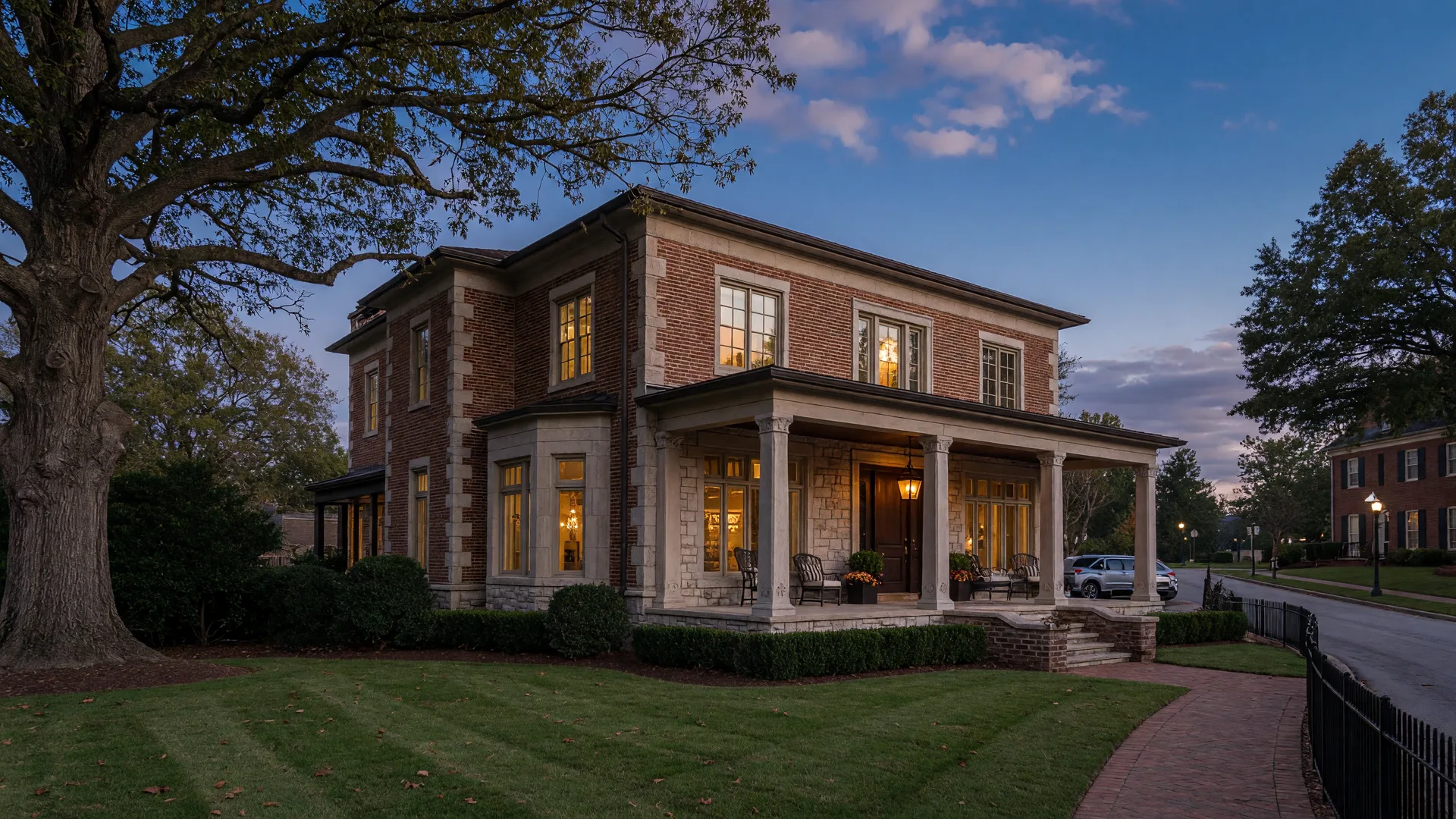
You found the right home, but your current one has not sold yet, and the listing agent wants an answer this week. That is the gap, and how you fund it decides whether you win the house. This guide lays out the three real ways to buy before you sell in Knoxville, the fall 2026 numbers on each, and the order I actually recommend them in, so you can make the call with your eyes open instead of under deadline pressure.
The gap is a financing question, not a timing question
Most buyers who get stuck assume the problem is the calendar: wait for the sale, then shop. The problem is really the down payment and the closing cash, sitting trapped in a home that has not closed yet. The whole game is unlocking that equity without paying a fortune for the privilege. That is what a bridge loan, a HELOC, and a home equity loan all do differently, and the differences matter at the price points where my clients usually shop.
The market gives you room to do this right. Knoxville is closer to balance than it has been in years: the metro median sale price runs near $410,000 in the latest monthly reading, up about 3.6 percent year over year (LocalAlpha), with the mid-year median near $397,000 and homes in the city closing at a median near $415,000 in September 2026 (Movoto). Supply has climbed to about 3.6 to 3.9 months at the metro level with roughly 2,900 active listings in the city as of October (Movoto), and homes are averaging about 55 to 57 days on market. Sellers are more patient with a sale contingency than they were two years ago. But the best homes in Farragut, West Knoxville, and Sequoyah Hills still attract multiple buyers quickly, so the financing has to be ready before you tour, not after you fall in love.
Start with the number lenders care about: your equity
Every option below runs on the same fuel: the equity in your current home. Before we talk products, we calculate it: current market value, minus your mortgage payoff, minus what the sale will cost. Long-term Knoxville owners usually find this number is strong, because values have appreciated steadily for years and only cooled to a crawl, not a correction, in 2026. A $750,000 home with a $280,000 mortgage has about $470,000 of equity, which is a lot of dry powder for a move. The lenders you speak with will frame it as a combined loan-to-value ratio, and most HELOC and home equity lenders want to stay around 80 to 85 percent of the home's value across all your loans.
The line to watch: your equity number, not your sale price, is what funds the move. If the equity is thin, the cheapest gap strategy is to list first and negotiate a rent-back so you move once. If the equity is strong, you have real choices.
Option one: a home equity line of credit (HELOC)
A HELOC is a line of credit secured by your current home. You draw what you need when you need it, and you pay interest only on the drawn balance during the draw period, which is exactly the shape of a buy-before-you-sell move: money out for the down payment, money back in when the sale closes. Late-October 2026 HELOC rates are running roughly 7.4 to 8.1 percent depending on the tracker, with Bankrate's national average at 7.36 percent, Curinos at 7.67 percent, and LendingTree's $100,000 line averaging 8.07 percent, most quotes landing in the 7 to 9 percent band while prime sits at 7.00 percent.
For most of my West Knoxville and Farragut clients, this is the tool I reach for first. It is flexible, the carrying cost while you sell is small, and you are not committed to a fixed amount if your plans shift. The catches are real: the rate is variable, the drawn balance adds a payment that counts against your debt-to-income ratio on the new mortgage, and the line is fully due when the home sells. You also want to confirm with your lender how the new mortgage underwriter treats the HELOC payment, because that can change the number you qualify for.
Option two: a fixed-rate home equity loan
A home equity loan is the same collateral, packaged differently: a fixed amount, a fixed interest rate, and a fixed monthly payment, essentially a second mortgage. Average fixed home equity loan rates were around 7.4 percent in mid-September 2026. Because the payment is predictable, this fits buyers who know the exact number they need: the down payment on the new home, the closing costs, the buffer, done.
The trade-off versus a HELOC is flexibility. You borrow the whole amount up front, and you pay interest on all of it from day one, even if the sale closes in six weeks. When the gap is small and the timeline is certain, the fixed payment is worth it. When the timeline is fuzzy, the HELOC's pay-only-what-you-draw structure usually wins.
Option three: a traditional bridge loan
A bridge loan is short-term money secured by the home you are selling, typically set up as a second mortgage, with a term of 6 to 12 months and a lump-sum balloon payment due when your sale closes. It is the most expensive option in the toolbox: common rates run roughly 7 to 12 percent plus 1 to 2 points, with industry averages recently near 11 percent, and the loan may be interest-only or payment-deferred until the sale funds.
So why would anyone use it? Because it makes your offer look like cash. No sale contingency, no lender-conditioned financing, just a clean, competitive offer on the exact home you want. In a multiple-offer situation on a luxury property in Sequoyah Hills or a rare Farragut estate, that can be the difference between winning and watching. I use it sparingly, and only when a HELOC or an equity-unlock program does not fit, but for the right buyer at the right price point, a few months of bridge interest is cheap compared with losing the house.

The fourth card: equity-unlock programs
Between the HELOC and the bridge sits a newer category: buy-before-you-sell programs like HomeLight that operate in Tennessee. A program partner unlocks a portion of your current home's equity so you can make a clean, non-contingent offer, and the convenience fee, typically in the low single digits, is repaid from your sale proceeds at closing. It costs more than a HELOC and less than a bridge, and it removes the contingency entirely. When your sale is already under contract but the closing has not happened yet, this can be the smoothest path of all.
The no-cost fallback: a well-structured contingency
The cheapest way to buy before you sell is the one that costs nothing: a home-sale contingency on your offer, with a short 30 to 60 day window and a kick-out clause that lets the seller keep a non-contingent backup and give you 24 to 72 hours to waive your condition. In fall 2026, with about 3.6 to 3.9 months of supply at the metro level and roughly 2,900 active listings in the city, sellers are more willing to wait than they were a year ago. But a contingency only works when your current home is already listed, priced well, and generating showings, and it only wins when you are ready to sell on day one. If you are not, no contingency structure saves you.
A worked example, with fall 2026 numbers
Let us make it concrete. These are illustrative figures, not a quote, but the structure is exactly what we run for clients.
The setup: current home worth $750,000 in West Knoxville, mortgage payoff $280,000, roughly $470,000 of equity. Your next home is $900,000 in Farragut, and the down payment plus closing costs come to about $190,000.
HELOC path: draw $190,000 at about 7.5 percent. Interest-only while you sell runs around $1,190 a month. Your sale nets roughly $427,000 after commission, the Tennessee transfer tax, and settlement costs, the HELOC is paid off in full, and you still bank a comfortable cushion.
Bridge path: same $190,000 at about 9 percent for a six-to-nine-month term. Interest-only runs around $1,425 a month plus points up front, and the whole balance is repaid at your closing. More expensive, but your offer carries no contingency at all.
In both cases, the carry cost for the window is measured in the thousands, not the tens of thousands, and it is almost always cheaper than losing the home, moving twice, or carrying two mortgage payments because the timing drifted. The right choice depends on whether the timeline is certain and whether you need to look like cash to win.
What the fall 2026 rate picture changes
Two rate facts shape this decision right now. First, the 30-year fixed averaged 7.32 percent for the week ending October 22, 2026, easing from 7.40 percent the prior week and up from 6.19 percent a year earlier, so the rate on your new mortgage is the number to lock early and protect. Second, HELOC rates near 7.4 to 8.1 percent, with most quotes in the 7 to 9 percent band, make the equity line measurably cheaper to carry this fall than a full bridge loan. The combination means the gap itself is affordable, but only if you plan it before you are under deadline.
One tax note, because it surprises people: since the 2018 tax law, interest on a HELOC or home equity loan is deductible only when the money is used to buy, build, or substantially improve the home that secures the loan. If the line is secured by your current home and funds the next one, the interest may not qualify, which changes the after-tax cost of the strategy. Run the specific numbers with your tax advisor; the structure of the move should never rest on a deduction you assumed.
How to choose: match the tool to the timeline
Three questions settle it:
Is your sale already under contract? If yes, an equity-unlock program or a short bridge covers the days between closings cleanly. If not, a HELOC gives you the flexibility to keep shopping without committing.
Do you need to win against multiple offers? The contingency costs nothing and loses deals. If the home is competitive, price the bridge or the equity-unlock program into the decision before you write the offer.
How long until your home sells? In Knoxville's balanced market, a well-priced home in Farragut, West Knoxville, or Sequoyah Hills still turns in weeks. A HELOC carries you through a longer, uncertain window for less money; a bridge is for a short, certain window where presentation matters most.
Frequently asked questions
What is the cheapest way to buy before you sell in Knoxville? For most homeowners with real equity, a home equity line of credit is the leanest option: you pay interest only on what you draw, and late-October 2026 HELOC rates are running roughly 7.4 to 8.1 percent, with most quotes in the 7 to 9 percent band. A well-structured home-sale contingency costs nothing, but it is the weakest card at the table. A bridge loan is the most expensive option, so it is reserved for the cases where it wins the house.
How much of my home's equity can I borrow against? HELOCs and home equity loans in the Knoxville area are typically capped around 80 to 85 percent combined loan-to-value, and qualifications, credit, and the lender all move that number. Run the actual figure with two or three local lenders before you shop at a higher price point.
Are bridge loan rates really that high? Yes, and the reason is that the money is short-term. Bridge loans commonly carry rates around 7 to 12 percent plus 1 to 2 points, with industry averages recently near 11 percent, because the lender expects a lump-sum repayment from your sale within 6 to 12 months. When the gap is small and the timeline short, that cost is often still cheaper than losing the house you wanted.
Does buying before selling make sense when mortgage rates are near 7 percent? It is a gap question, not a rates question. The bridge or HELOC covers the down payment and the window before your sale funds. If your equity covers the down payment and your current home is priced to sell, a few months of gap financing can be a small price for getting the right home, especially with the 30-year fixed near 7.32 percent and locking early protecting your new payment.
The Bottom Line
Buying before you sell is not a gamble, it is a financing decision, and in fall 2026 Knoxville the options have never been clearer. If your equity is strong and your timeline is uncertain, a HELOC in the 7 to 9 percent band carries you for a modest monthly cost while your home sells. If the timeline is certain and the home is competitive, a bridge loan or equity-unlock program buys you the cleanest offer. And if you are not ready to list, no financing tool saves you, because the contingency only works when your current home is already on the market and drawing buyers. Run the equity number first, then pick the tool.
If you are a Knoxville-area homeowner trying to buy your next home before this one closes, I will walk the whole gap with you: your equity, the right financing option at today's rates, and the order of operations that gets you one move instead of two. Thirty minutes, real numbers, no pressure. That is how a simultaneous move should start.
Ready to plan your sell-buy move?
Let us map your equity, your timeline, and the right way to fund the gap, so you buy the right home without moving twice. Straight talk, no obligation.