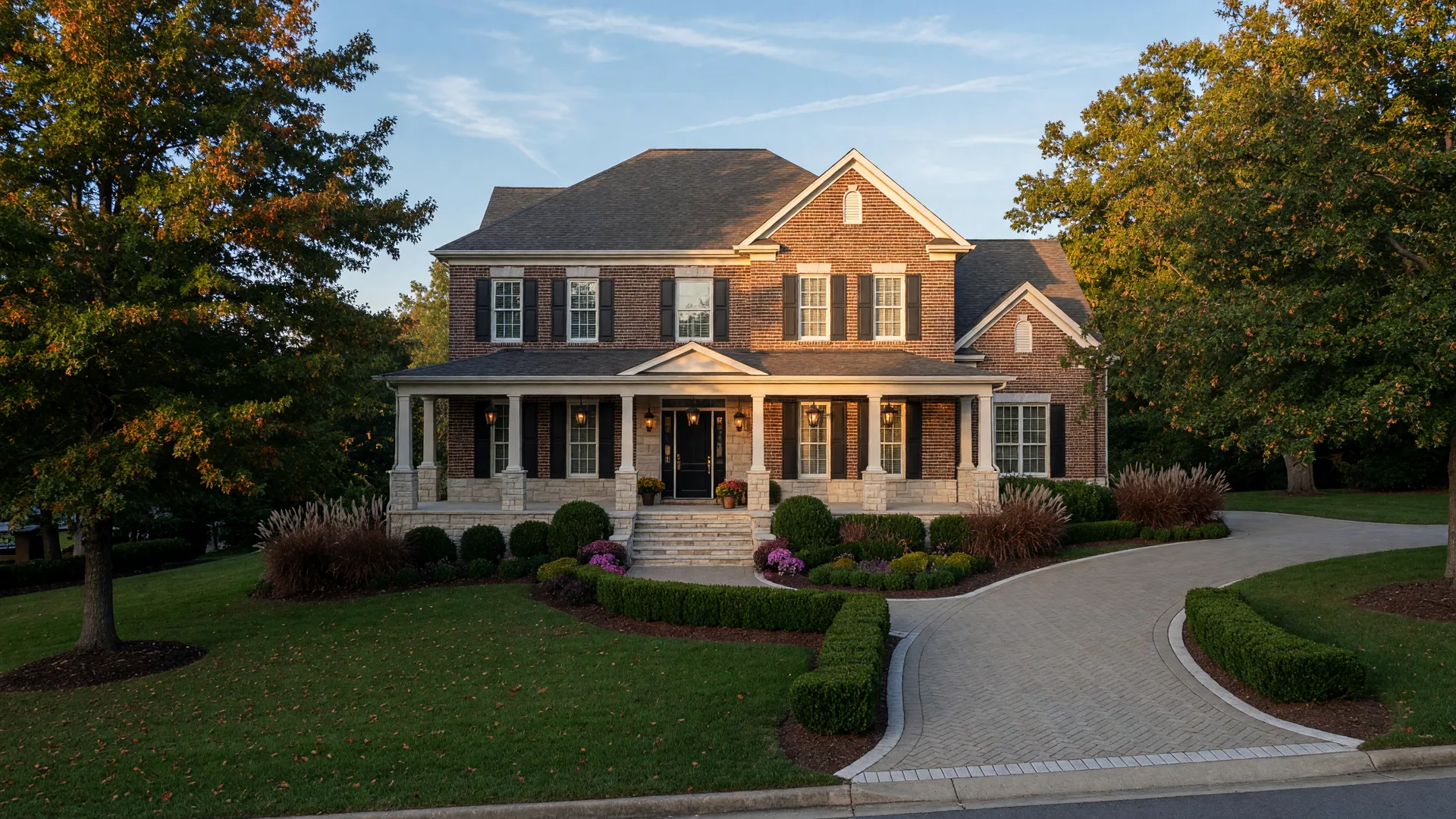
Is Farragut worth the money? The honest answer: for the right family, yes, and for others, no. Farragut's typical home value sits around $701,737 and its median sale price is near $787,000, roughly 2.4 times Knoxville's median. The premium buys three measurable things: a school system that is consistently among the best in Tennessee, a tax structure friendlier than most buyers assume, and a lifestyle built on parks, greenways, and low crime. Whether that premium is worth it depends entirely on what your family actually needs, so let us put real numbers next to the real trade-offs.
What Farragut actually costs in fall 2026
Start with the price, because that is the number everyone asks about. Zillow's typical home value in Farragut is $701,737 as of late July 2026, up 1.8 percent year over year. Redfin's median sale price over the last three months is about $787,000, up roughly 14.9 percent year over year, with the average sale price near $800,000. Movoto's June 2026 median was $777,000. Median price per square foot runs about $275 to $286 depending on the source.
Now the comparison that matters. Knoxville overall has a typical home value of $374,452, up 1.1 percent year over year, with a median sale price around $325,000. So Farragut runs about 1.9 times Knoxville's typical value and 2.4 times its median sale price. That makes Farragut the most consistently expensive mainstream community in the metro, and it has been for years. The premium is not an accident and not a bubble. It is the market pricing the schools, the safety, and the standards.
Demand is part of the story too. Zillow shows Farragut homes going to pending in about 15 days on average. Redfin reports about 66 days on market and Movoto about 30, and the spread between those numbers tells you something useful: the well-priced, well-presented homes move in days, while the overpriced ones sit. In a market like this, pricing discipline is not a strategy, it is the whole game.
The line to remember: Farragut is expensive because it delivers. The question is not whether the premium is real, it is whether your family is the one it serves.
The schools are the heart of the premium
If you are moving to Farragut for one reason, it is usually the schools. The town's four public schools are part of Knox County Schools and form one continuous feeder chain: Farragut Primary (grades PK through 2), Farragut Intermediate (3 through 5), Farragut Middle (6 through 8), and Farragut High (9 through 12). Your children walk through the same community from kindergarten to graduation, and the ratings back up the reputation.
Farragut High School. Ranked in the top 5 percent of Tennessee high schools, with a GreatSchools rating of 8 out of 10 and an A grade on Niche. It is the anchor of the whole system.
Farragut Middle School. Ranked the number one middle school in Knox County and better than 96.6 percent of middle schools in Tennessee. That is not a rounding error, it is the top of the county.
Farragut Intermediate School. A 10 out of 10 on GreatSchools and in the top 5 percent of Tennessee elementary schools. This is where the feeder chain builds the foundation.
Farragut Primary School. The entry point for the youngest students, feeding directly into the same campus community all the way up.
For relocating families, this is usually the deciding factor, and I understand why. You make the school decision once and live with it for 13 years. Buying in an unfamiliar market with an unknown school system is the single scariest part of an out-of-state move, and Farragut removes that risk. One caveat I always check: school assignments depend on the exact address, and the feeder chain is the standard path but boundaries can matter. I verify the line for every address before we shop, not after.
The tax math is better than you think
Here is the piece most buyers never see coming, and it is good news. The Town of Farragut levies no municipal property tax at all: $0.00 per $100 of assessed value. Farragut homeowners pay only the Knox County rate of $1.5540 per $100 of assessed value for fiscal year 2026, and Tennessee assesses residential property at 25 percent of appraised value. That works out to an effective rate of about 0.39 percent of market value.
Put it in dollars. On a $700,000 home, the assessed value is $175,000, and the county tax is about $2,720 a year. The same $700,000 home inside Knoxville city limits pays the county rate plus the city rate, a combined $2.9496 per $100, which comes to about $5,160 a year. That is a difference of roughly $2,400 a year, every year, for the life of your ownership. Farragut's no-city-tax status is a quiet, compounding advantage that rarely shows up in the list price conversation.
The 2026 reappraisal changed the picture for everyone in Knox County. Countywide residential appraised values rose about 60 percent, and Tennessee's certified-rate system is designed to be revenue neutral: if your home's value rose about 60 percent, your bill stays roughly flat; rose less, it may drop; rose more, a modest increase. Farragut is outside Knoxville city limits, so the city rate cut does not apply here, but the county math does. The honest takeaway: property taxes are not the hidden cost that disqualifies Farragut. On a price-per-dollar basis, they are actually one of its advantages.
The lifestyle premium
Farragut is a town of roughly 23,800 to 25,000 people, incorporated in 1980 and spanning about 16 square miles. Niche ranks it the number one place to live in the Knoxville area with an A overall grade and an A+ for families, and the median household income is about $94,420. Crime is low, consistently, and that is a data point, not a feeling.
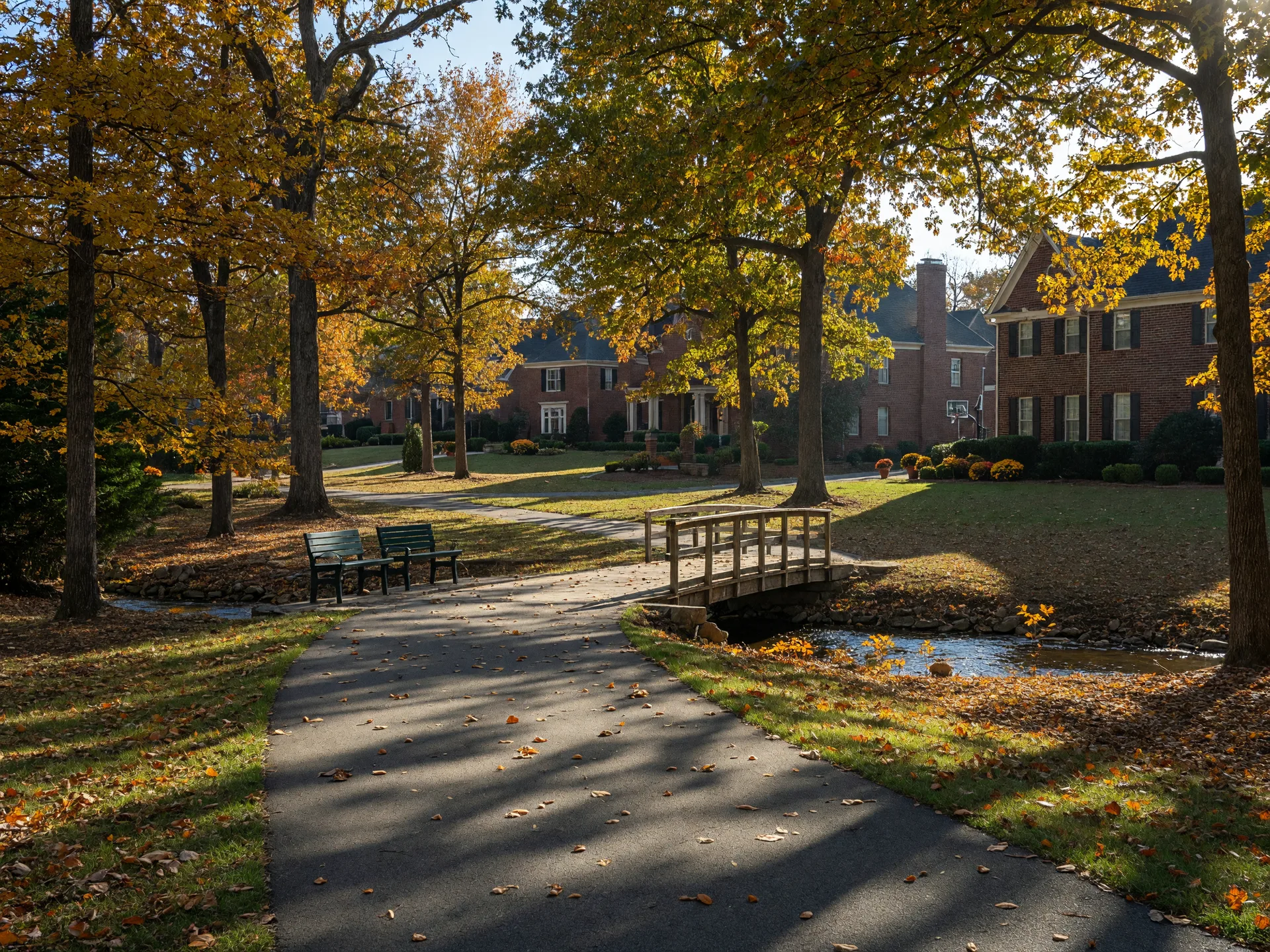
The town backs the reputation with amenities. Five parks plus a plaza, including Anchor Park, a 19-acre lakeside park with fishing and playgrounds, McFee Park, and Founder's Park at Campbell Station, along with more than 15 miles of greenway trails. Turkey Creek is the commercial hub for shopping and dining, and the commute to downtown Knoxville runs about 19 minutes on the I-40 and I-75 corridor, with easy access to West Knoxville employment and Oak Ridge.
One thing to know before you fall in love: most Farragut neighborhoods have homeowners' associations. Dues typically cover pools, clubhouses, playgrounds, tennis courts, trails, and shared structures, and the town enforces design and quality-of-life standards. That is a large part of why Farragut looks the way it does, consistent, manicured, maintained. It is also a commitment. If you want to park an RV, run a home workshop, or let the lawn go for a month, Farragut will have opinions about all three.
Where Farragut is not the answer
The premium only makes sense when it buys what you need. Here is where Farragut loses to its neighbors:
If budget is the priority, Hardin Valley wins. Hardin Valley runs about $228 to $253 per square foot against Farragut's $275 to $286, with a median sale price near $594,000 versus Farragut's roughly $787,000. You get newer construction, Hardin Valley Academy as the school anchor, and the same West Knoxville quality of life for meaningfully less.
If you want no HOA, Farragut is the wrong town. Neighborhoods like Sequoyah Hills, Fountain City, and parts of South Knoxville still offer no-HOA streets where you own your choices. Farragut's consistency is the point, and if it is not your point, you are paying for something you do not want.
If you want urban energy, you want downtown. Market Square, the Old City, and the riverfront deliver walkability and nightlife that no suburb can. Farragut is a great place to raise a family and a quiet place to spend a Friday night.
If you want one-level living, expect to compete. Much of Farragut's inventory is two-story, and the single-level homes with main-level primary suites go fast. The demand is real and the supply is thin, so the right ranch takes speed and preparation.
None of this makes Farragut a bad buy. It makes it a specific buy. The families who love it know exactly what they are paying for, and the families who regret it usually skipped the trade-off conversation.
The Farragut test: five questions before you pay the premium
Run these five before you set a budget:
1. Are the schools the deciding factor? If yes, Farragut is the strongest public-school package in the metro, end to end. That alone can justify the premium for a family with school-age kids.
2. Does the tax math help you? No town tax is a real, recurring advantage over city homes, and the reappraisal math is mostly revenue neutral. Run your own numbers before you assume the worst.
3. Can you live with HOA standards? Read the covenants before you fall in love with the house, not after. Ask about dues, reserves, and the design review process.
4. Does the commute actually work? Test-drive the drive at the time you would actually make it. Nineteen minutes to downtown is fine on paper; rush hour on I-40 through West Knoxville is the real test.
5. Can you buy the premium without stretching? The 30-year fixed rate averaged 7.32 percent for the week ending October 22, 2026, easing from 7.40 percent mid-month and up from 6.19 percent a year earlier. The payment on a $787,000 median home is a different conversation than it was in 2025. Model it before you shop, not after.
I walk every Farragut buyer through all five before we look at a single listing. That is why the families I work with tend to land in the right community, not just the right house.
Frequently asked questions
Is Farragut the most expensive place in the Knoxville area? Among mainstream suburbs, yes: typical home value about $701,737 and median sale price near $787,000, roughly 1.9 to 2.4 times Knoxville's numbers. Sequoyah Hills and lakefront areas can top it per square foot, but no full community is more consistently expensive.
Are Farragut schools really that good? Yes, by every ranking: Farragut High in the top 5 percent of Tennessee high schools, Farragut Middle the top middle school in Knox County, Farragut Intermediate in the top 5 percent of Tennessee elementary schools, all in one feeder chain.
What are the property taxes in Farragut? No town tax. The Knox County rate is $1.5540 per $100 of assessed value, residential is assessed at 25 percent, so the effective rate is about 0.39 percent: roughly $2,720 a year on a $700,000 home.
Is Farragut good for retirees and empty nesters? Yes, with one caveat. Crime is low, parks are excellent, and West Knoxville has strong medical access, but much of the inventory is two-story, so one-level homes go fast and carry a premium.
How does Farragut compare to Hardin Valley? Hardin Valley is the more affordable West Knox option at about $228 to $253 per square foot with a median near $594,000, newer construction, and Hardin Valley Academy. Farragut has the deeper school reputation, the established neighborhoods, and the higher price.
Do I need an agent to buy in Farragut? You do not legally need one, but homes go to pending in about 15 days. A local agent who knows the school lines, the covenants, and the real comps is often the difference between winning and watching.
The full Farragut picture, in one place
I put together a community guide for families considering Farragut: statistics, schools, neighborhoods worth knowing, and what to expect at each price point. It is the same document I hand to buyers on our first call.

The Bottom Line
Is Farragut worth the money? For families whose deciding factor is schools, for buyers who want the most consistent, lowest-risk community in the Knoxville area, and for owners who value the tax advantage of no city tax, yes, the premium is worth it. For buyers who want acreage, no HOA, or a lower payment, the honest answer is that the same money goes further elsewhere. Farragut is not overpriced, it is specifically priced, and the way to know which side you are on is to put your actual numbers next to the actual trade-offs.
That is exactly what we do on a 30-minute call: your budget, your school needs, your commute, and a straight answer on whether Farragut earns your premium or whether a neighboring community fits better. Let us chat.
Wondering whether Farragut fits your family?
Book a 30-minute call and we will match your budget, schools, and commute against the real Farragut trade-offs, and the alternatives that might fit better.