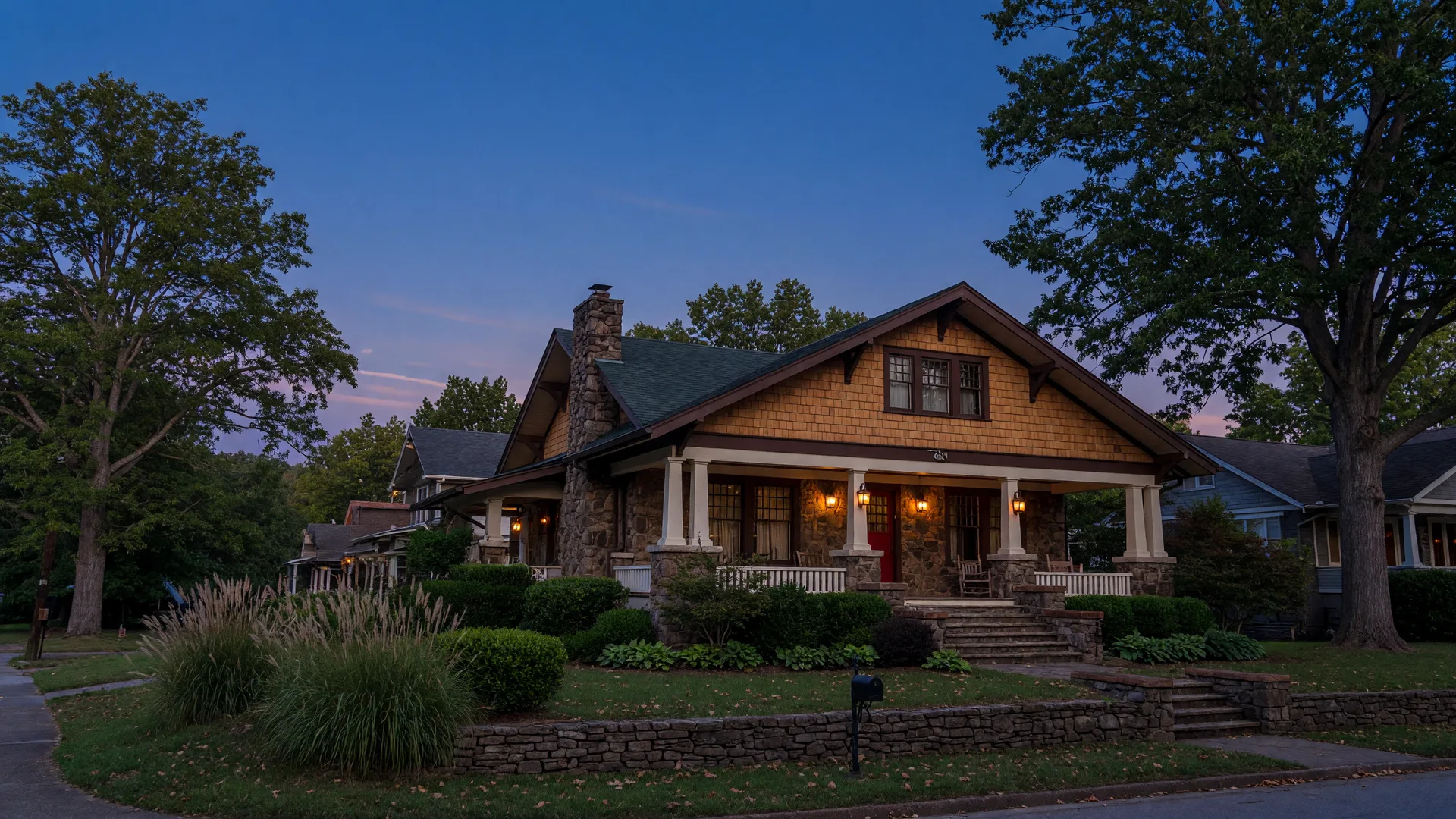
Right-sizing gets talked about as a lifestyle decision, but before the lifestyle comes the math. Every right-size move I help a Knoxville family make comes down to one equation: will the smaller home cost less to own, month after month, than the big one, after you count what you keep from the sale and what you pay to move? Run those numbers honestly and a lot of the emotional noise disappears. Here is the equation, worked with fall 2026 Knoxville data, and the four numbers you need before you schedule a single showing.
Start with the number that funds the move: your net proceeds
The first number is what you actually walk away with from the sale, not the sale price. In a typical Tennessee transaction the seller's side covers the real estate commission, the state realty transfer tax of $0.37 per $100 of price, title and settlement fees, and prorated taxes. Commission total is negotiable since the August 2024 NAR settlement, and together those costs typically take roughly 7 to 9 percent off the top line. On a $725,000 sale with a $250,000 mortgage payoff, that leaves you about $425,000 to $430,000 in net proceeds before any capital gain, and for most Knoxville sellers the gain is fully excluded from federal tax under the $250,000 single / $500,000 married home-sale exclusion. Tennessee has no state income tax, so there is no state bill on the gain at all.
That net number is the engine of your whole move. It can shrink your new mortgage to nothing, fund the down payment on a better-located home, or sit as cash while you carry a smaller loan. The market right now is cooperative if you price honestly: the Knoxville metro median sale price is around $397,000, homes in the city closed at a median near $415,000 in September 2026 (Movoto), and the typical home value sits near $374,000, up about 1.7 percent year over year. Inventory has climbed to about 3.9 months of supply at the metro level with roughly 2,900 active listings in the city, the closest Knoxville has come to balance in years, and homes are averaging about 55 days on market (Movoto, September 2026). A well-priced home sells; an overpriced one now waits and cuts.
What your current home is really costing you every month
The second number is what it costs to carry the home you have, and most homeowners have never added it up. Property tax in Knox County runs roughly 0.4 percent of a home's market value a year, well below the national average. The 2026 countywide reappraisal pushed recorded values up roughly 60 percent, but the Commission cut the certified rate to keep the average bill revenue neutral, so the reappraisal changed assessed values far more than it changed most tax bills. On a $725,000 home, that still means about $2,900 a year in county taxes alone.
Then add insurance, which climbs with replacement cost, and maintenance, which the industry rule of thumb puts near 1 percent of home value a year. A $725,000 home asks for roughly $7,000 a year in upkeep before a single repair. Utilities scale with square footage and age of the home, and a 3,400-square-foot house heats, cools, and lights a lot more space than you actually occupy. Add it up and a big home on a big lot quietly costs $1,200 to $1,500 a month before the mortgage payment even shows up. That is the carrying cost that a right-size move can shrink.
The line to watch: taxes, insurance, and maintenance run on home value, not on the size of your family. Every dollar the home is worth more is a dollar of annual cost. A $200,000 drop in home value, all else equal, cuts that carrying-cost base by several thousand dollars a year.
What your next home costs per square foot
The third number is what the replacement costs. Knox County sale prices run around $221 per square foot, with metro listing medians near $234, and the $600,000 to $2,000,000 range where most of my right-size clients shop lands considerably above the county blended average because location, age, and finishes move the needle. In West Knoxville and Farragut, one-level homes and ranch plans with a main-level primary suite command a premium, because demand from right-sizing buyers keeps outstripping a thin supply of true single-level inventory. Smart right-sizers budget for that premium instead of being surprised by it.
Here is the part most people miss: you are not comparing the same product at different square footages. You are trading 3,400 square feet of rooms you walk through for 2,300 to 2,500 square feet you actually use, usually in a newer, better-insulated, better-appointed home with a better location. The per-square-foot price is higher. The total price is lower. And the total price is the only number that shows up on your tax bill, your insurance quote, and your mortgage.
Run the monthly comparison: a worked example
The fourth number is the monthly comparison, and this is where the equation actually gets solved. Let us run a realistic fall 2026 example. These are illustrative figures, not a quote, but the structure is exactly what I build for every client.
Selling side: current home worth $725,000 in West Knoxville, mortgage payoff $250,000. Seller costs at about 6.2 percent: commission, Tennessee transfer tax at 0.37 percent, title and settlement, prorations. Net proceeds land near $428,000.
Buying side: a 2,400-square-foot right-size home at $525,000. Put $300,000 down, finance $225,000 at 7.32 percent. That is where the 30-year fixed sat in Freddie Mac's October 22, 2026 survey, easing from 7.40 percent the prior week and up from 6.19 percent a year earlier. Principal and interest land right around $1,545 a month.
Carrying side: taxes near 0.4 percent of $525,000, insurance on a smaller replacement, maintenance on a younger home, and utilities on a thousand fewer square feet. Together those line items drop several hundred dollars a month versus carrying the $725,000 home.
Total the pieces and the new home costs less to own than the old one does today, with roughly $125,000 of the net proceeds still in the bank after the down payment, closing costs, and moving. The mortgage piece is the part rates control, and at 7.32 percent it only works when the loan actually shrinks. The carrying-cost savings are the part you control, and they work in almost any rate environment. That is the whole equation in one paragraph.
The line items everyone forgets
Four costs quietly decide whether the math holds, and they are the ones clients thank me for flagging early.
Buyer-side closing costs: lender fees, title work, appraisal, and escrow typically run 2 to 4 percent of the purchase price in Tennessee. On a $525,000 purchase that is $10,000 to $20,000 beyond the down payment. It comes out of your net proceeds, so it belongs in the equation.
HOA dues: villas, patio homes, and planned communities in Farragut, Hardin Valley, and the lake communities trade a maintenance burden for a monthly fee. Read the HOA financials and the dues history before you commit, and budget the dues as a line item, not a footnote.
The timing gap: if your sale and purchase do not align, you can carry two properties for a month or two, or pay for temporary housing. In Knoxville's balanced market the risk window is shorter than it used to be, but the cost is real and the plan should name it.
Moving and furnishing: professional movers, a storage unit, and the inevitable furniture the old house fit but the new one does not, run thousands of dollars. Budget $8,000 to $15,000 so the savings you projected survive first contact with reality.
Why one-level living keeps winning the equation
The fastest-growing line of the right-sizing conversation is main-level living. A ranch plan or a villa with the primary suite on the main floor eliminates stairs, simplifies cleaning, and keeps the home functional for decades to come. Builders in Hardin Valley and West Knoxville keep adding main-level owner suites because the demand is relentless, and the established single-story inventory in areas like Sequoyah Hills and Farragut turns over quickly. One-level homes cost more per square foot in Knoxville because there are fewer of them chasing the same buyers. Factor that premium into your budget and you will not be disappointed when the numbers come in.
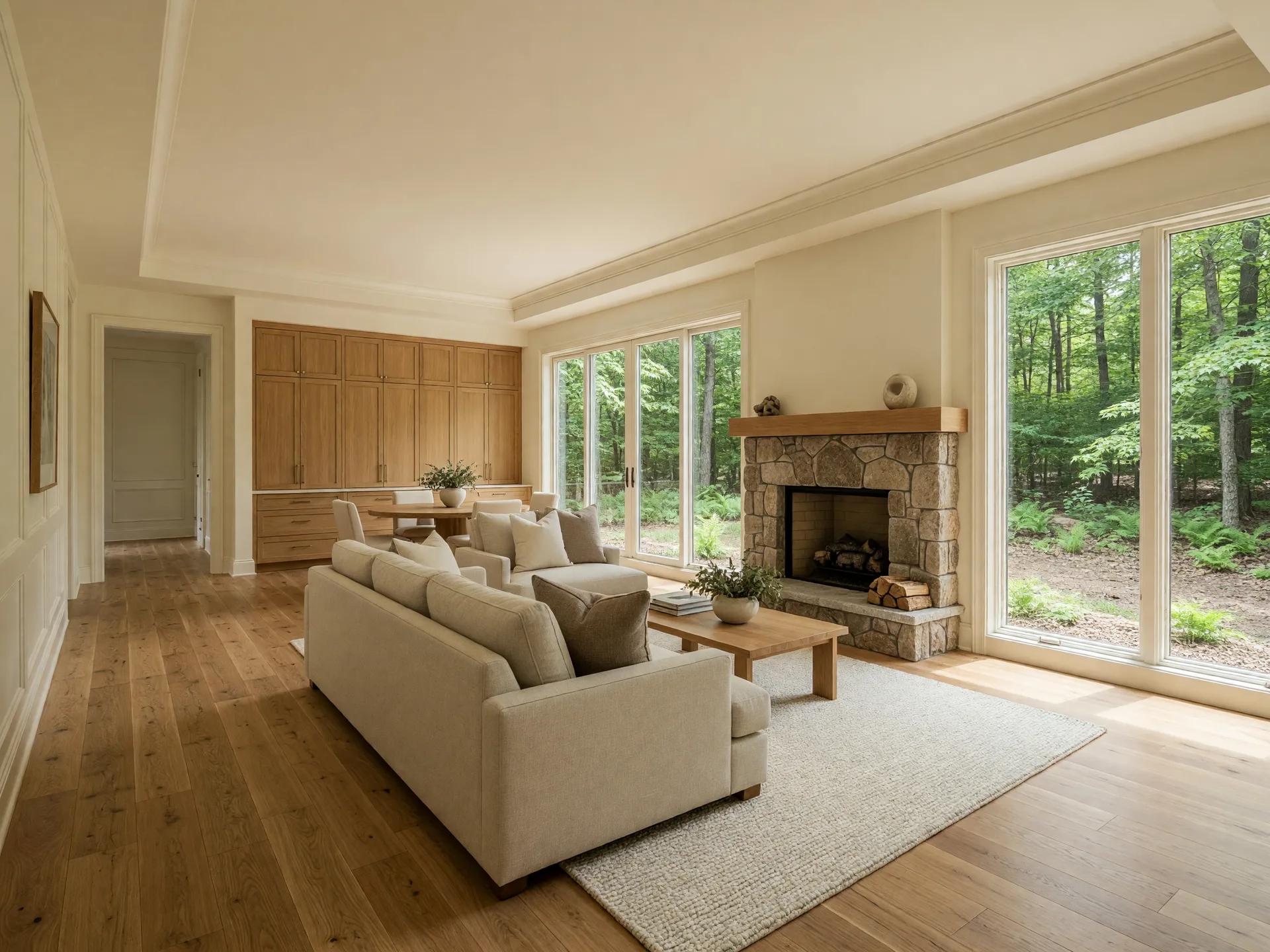
How do you know the smaller home is actually cheaper?
You run the equation before you tour a single property. Six checks settle it:
Run your net proceeds first. Commission, transfer tax, closing costs, payoff. The walk-away number funds everything, so it comes first.
Compare total monthly housing cost, not just the mortgage. Taxes, insurance, maintenance, utilities, HOA, all on both sides of the ledger. A smaller mortgage on a more expensive-to-carry home is not a win.
Verify the tax bill on both addresses. Get the actual assessed value and the post-reappraisal bill for your current home, and the recorded tax on the home you are buying. Do not estimate what the county will bill.
Get insurance quotes on both. Replacement cost, not sales price, drives the premium, and newer homes with updated systems often quote lower.
Price the mortgage at 7.32 percent, not the rate you remember. Rates pressed higher through September and into October 2026, hovering near their highest in about three years. Locking early is the difference between a payment that works and one that does not.
Add the one-time costs. Buyer closing costs, moving, furnishing, and a timing buffer. The equation runs monthly, but the move itself is a cash event up front.
Frequently asked questions
How do you know a smaller home is actually cheaper to own? You compare total monthly housing cost, line by line: the new mortgage at today's rate, property taxes, insurance, maintenance, utilities, and HOA dues, against what the current home costs to carry. In Knox County, property tax runs roughly 0.4 percent of a home's market value a year and maintenance is commonly estimated near 1 percent of value annually, so a $200,000 drop in home value moves those line items meaningfully.
Do I have to pay capital gains tax when I right-size in Tennessee? Most Knoxville sellers do not. Under IRS Section 121, you can exclude up to $250,000 of gain on a primary home, or $500,000 for married couples filing jointly, if you owned and lived in the home two of the past five years. Tennessee also has no state income tax, so there is no state bill on the gain.
Does it make sense to right-size when mortgage rates are near 7 percent? It can, but only when the math supports it. With the 30-year fixed averaging 7.32 percent for the week ending October 22, 2026, the mortgage piece only helps if your equity lets you shrink the loan or eliminate it. The savings that usually tip the decision are the ones you control regardless of rates: lower property taxes, insurance, maintenance, and utilities on a smaller, newer, or one-level home.
The Bottom Line
Right-sizing is a lifestyle upgrade that has to survive a spreadsheet. The homeowners who make it work run four numbers first: net proceeds from the sale, what the current home costs to carry each month, what the replacement costs per square foot, and the full monthly comparison at today's rate. In fall 2026 Knoxville, with the market closer to balance than it has been in years and equity still strong for long-term owners, that equation works for most families who run it honestly. The ones who struggle are the ones who price the dream before they price the math.
If you are a Knoxville-area homeowner wondering whether the equation works for you, I will run the entire thing with you: current market value, net proceeds, the carrying-cost comparison, and the monthly numbers on the homes you actually want to see. Thirty minutes, real math, no pressure. That is how a right-size move should start.
Want to run your right-sizing numbers?
Let us put your actual numbers into the equation: what your home is worth, what you will net, and what the right-size move would cost and save you each month. Straight talk, no obligation.