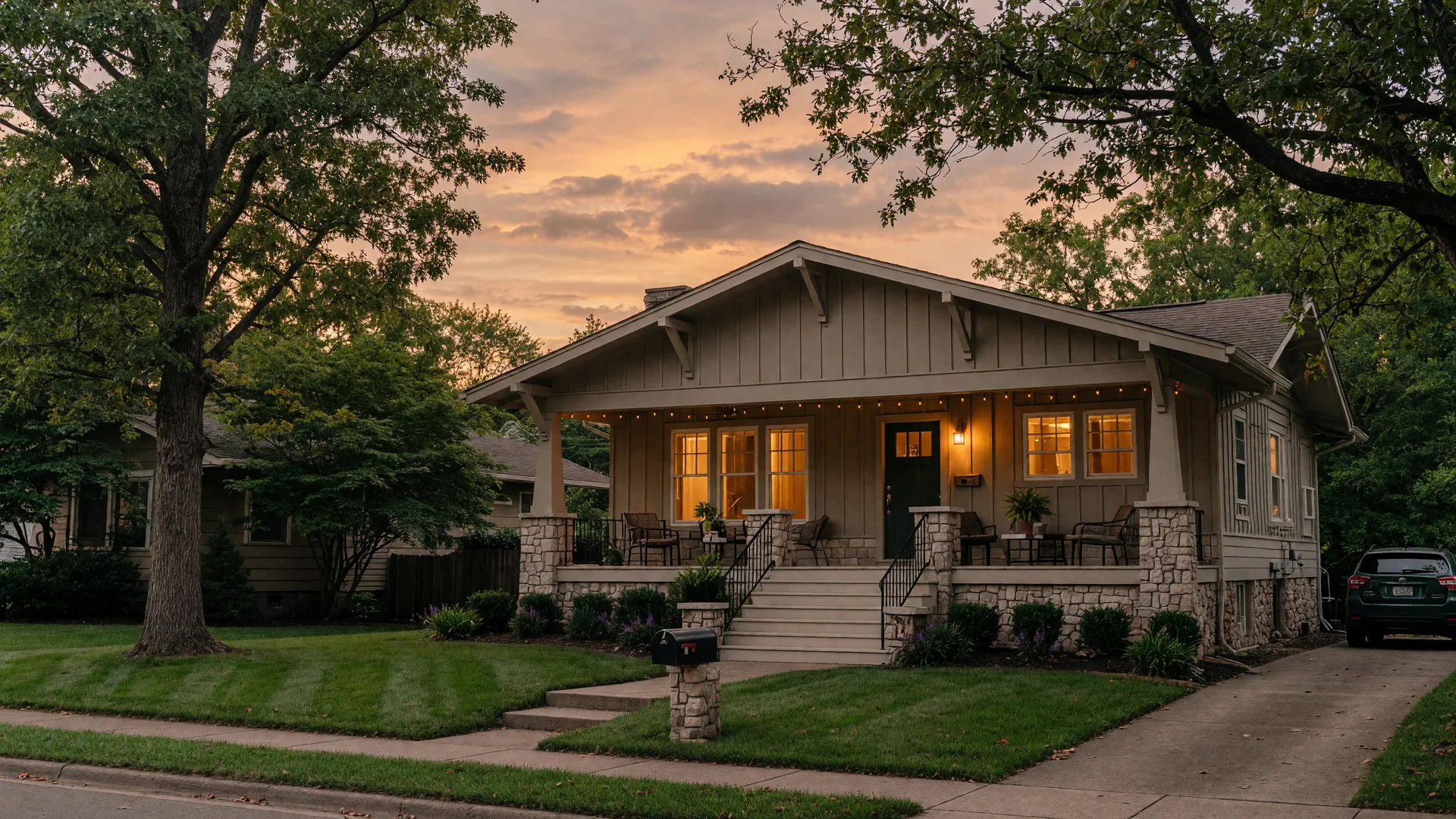
When is the right time to right-size your Knoxville home? The honest answer: sooner than most people think, and not for the reason they expect. The fall 2026 numbers are not moving in a direction that rewards waiting. Home values are roughly flat, mortgage rates sit near 7.3 percent, and the county's 2026 reappraisal raised assessed values by about 60 percent, so carrying a home you no longer use costs more every month. Meanwhile the life-stage signs that usually trigger this move, empty rooms, stairs that feel steeper, maintenance that feels like a second job, only get more urgent. Here is how to time the decision with data instead of headlines.
The market timing question, answered honestly
Let us get the market out of the way first, because it is the number one reason families tell me they are waiting. The Knoxville market is not crashing, and it is not booming. It is balanced. Zillow's average home value in the city sits at $374,452, up 1.1 percent year over year as of late July 2026. The FHFA house price index for the Knoxville metro is up about 3.9 percent from a year ago. Knox County's median sale price was $400,113 in May 2026, essentially flat year over year. Prices are holding, not soaring and not falling.
What has changed is the cost of the wait. The 30-year fixed-rate mortgage averaged 7.32 percent for the week ending October 22, 2026 (Freddie Mac Primary Mortgage Market Survey), easing from 7.40 percent mid-month and still up from 6.19 percent a year earlier. Inventory has climbed to about 3.6 to 3.9 months of supply at the metro level, the closest the market has come to balance in years, with roughly 2,900 active listings in the city as of October. Median days on market run near 55 to 57 for the metro. That is a healthy, normal market. Waiting for the perfect moment, the rate drop plus the price dip, means waiting on two things nobody can schedule, while the reasons you are considering the move keep compounding.
The line to remember: in a balanced market, timing matters far less than your life stage and your financial readiness. Knoxville in late 2026 is not a market that punishes you for moving. It is a market that rewards sellers who price honestly and buyers who move with a plan.
Life timing beats market timing
The clients I see who wait for the perfect market usually move anyway, two or three years later, after a knee problem, a retirement, or a big trip changes their plans. The families who right-size well move because a life event made the decision obvious, and they plan around it. Here are the triggers I hear most often in Knoxville:
The last kid leaves. The upstairs bedrooms have been guest rooms for a year. You are heating, cooling, insuring, and maintaining square footage nobody sleeps in. This is the single most common right-size trigger in West Knoxville and Farragut.
Retirement redraws the map. No commute means no reason to live 20 minutes from the office. Suddenly the half-acre lot, the three-car garage, and the commute corridor are pure overhead, and the places you actually want to be, downtown, the lakes, the Smokies, matter more.
The stairs become a planning problem. You notice you are carrying everything downstairs in the morning so you do not have to go back up. That is the signal, not the condition itself. Main-level living is the fastest-growing request in my buyer conversations.
Maintenance takes over weekends. A 3,500-square-foot home on a mature lot is a part-time job. When the weekend list is gutters, mulch, a water heater, and a fence repair, the home owns you instead of the other way around.
None of these triggers wait for the Fed. And every one of them, left alone, makes the eventual move harder: the home ages, the maintenance backlog grows, and the energy you have for a project like this slowly shrinks. Right-sizing is a project best started from strength, not exhaustion.
The carrying-cost math just changed in Knoxville
Here is the piece most families have not priced in yet. Knox County's 2026 reappraisal raised residential assessed values by roughly 60 percent, and while both governments reset their rates to be revenue neutral, the bill you pay depends on how your home's value moved relative to the countywide average. The certified county rate for fiscal year 2026 landed at $1.0158 per $100 of assessed value (down from $1.5540); inside Knoxville city limits, the city rate was cut from $2.1556 to $1.3956 effective for the tax period beginning July 1, 2026, for a combined about $2.41 per $100 on city homes. Tennessee assesses residential property at 25 percent of appraised value, so a $700,000 home carries about $4,220 a year in combined county and city property tax, roughly $1,780 county only for homes outside the city.
What does that mean for timing? Holding a larger home in Knoxville just got more expensive on paper, which changes the private math of waiting. Add the tax increase to utilities, insurance, and maintenance on unused square footage, and the cost of the extra year in the old house is often thousands of dollars, money that would have been a down payment or a payment on the right-size home. The reappraisal has quietly made right-sizing more financially attractive than it was a year ago.
What waiting actually costs, in dollars
Put numbers on it and the decision gets easier. A few of the real costs I model with right-size clients:
Carrying an unused mortgage. If you still have a balance, every month you stay is a month of principal and interest on space you do not live in. With rates where they are, that payment is not small.
Deferred maintenance compounding. A roof near end of life, an aging HVAC, a water heater past its decade, these do not get cheaper because you wait. They get more expensive and they get disclosed to the next buyer either way.
Rate exposure on the other side. If you wait for the perfect time and rates are higher when you finally borrow, you spend more per month for the life of the loan. Waiting has an interest-rate risk either direction; locking a workable number while you still control the timeline is the smarter play.
The gain exclusion clock never stops. For most owners the federal capital-gains exclusion means nothing to worry about, but it is worth knowing: a married couple can generally exclude up to $500,000 of gain on a home they have lived in for two of the last five years, $250,000 for single filers. Long-time Knoxville owners with big appreciation should check the math before assuming the exclusion always covers them.
None of this is a scare tactic. It is the same discipline I bring to every listing: look at the real carrying costs, compare them against the life you actually want, and make the move with your eyes open. Most families I work with, when they see the numbers, stop asking whether they can afford to move and start asking why they waited.
One-level living is no longer a niche
If your reason for right-sizing is the stairs or the maintenance, you are in good company, and the market is listening. Cook Bros. Homes, one of the largest builders in the region, reports that main-level living continues to gain momentum across East Tennessee and has built entire collections, like its Legacy Collection, around single-story ranch design. The drivers are exactly what my clients describe: aging in place, no stairs, easier upkeep, and a layout that flexes with life. Custom builders report the same signal, with aging-in-place design elements on the rise across Knoxville projects.
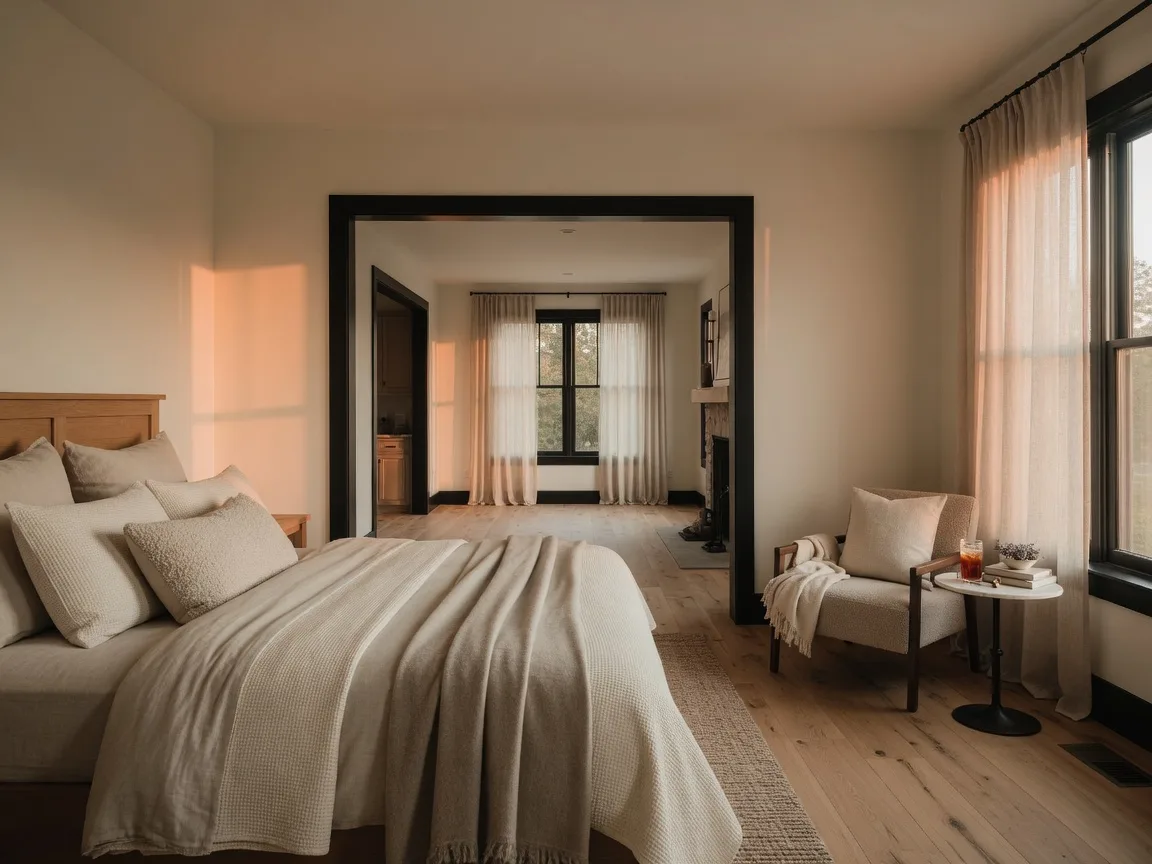
The catch is supply. Only about 100 single-story homes are listed for sale in Knoxville on any given day, so the good ones move fast and rarely last long enough for a slow decision. If one-level living is part of your plan, that is a reason to be deliberate early, not a reason to wait: the right ranch in the right neighborhood gets bought by the family who was ready.
What to look for in a right-size floor plan: a primary suite on the main level, laundry on the same floor as the bedroom, no more than two or three steps at the entry, wide doorways, and a kitchen-to-living flow you can actually use every day. These are the features that turn a smaller home into a better one.
Four checks before you commit to a timeline
Once the life trigger is real, the timing question becomes practical. Run these four checks before you set a date:
1. Your net proceeds. Build a realistic number from the most recent closed comps in your exact neighborhood, not a Zestimate or an anecdote. This is the fuel for everything else, down payment, closing costs, renovation budget, or a smaller loan.
2. The replacement payment at today's rates. A smaller home often means a smaller loan, but at 7.32 percent the monthly payment can surprise you if you are coming off a low-rate mortgage. Model it before you shop, and know whether you are buying cash, carrying a balance, or using a HELOC.
3. The tax picture on both sides. Inside the city limits versus the county changes your property tax bill at the new house, and the reappraisal changed your current one. Know both numbers before you fall in love with a floor plan.
4. The timeline for your current home. Plan on 60 to 90 days from listing to closing in this market, then decide whether that works with your purchase side: sell first with a rent-back, buy first with bridge financing, or negotiate a contingency. The order of operations is a strategy, not a hope.
I walk right-size clients through all four checks before we look at a single listing. That is why the families I work with tend to move once, on schedule, and without the panic that comes from winging the sequencing.
Frequently asked questions
Is the Knoxville market going to crash? No data supports it. Values are up 1 to 4 percent year over year depending on the measure (Zillow, FHFA), Knox County's median sale price was flat in May 2026 at $400,113, and inventory has simply normalized toward balance at about 3.9 months of supply at the metro level.
Should I wait for rates to drop? You cannot schedule it, and rates have gone the other direction lately: 7.32 percent on October 22, 2026, versus 6.19 percent a year earlier. Model both scenarios, then decide on your life stage, not on a forecast nobody can guarantee.
Will the reappraisal raise my tax bill? If your home's value rose more than the countywide 60 percent average, yes, even after the rate resets. Inside the city, the combined rate is now about $2.41 per $100 of assessed value (county $1.0158 plus city $1.3956), about $4,220 a year on a $700,000 home. Check your own notice for your exact change.
Is one-level living really in demand? Builders say yes. Cook Bros. reports main-level living continues to gain momentum in East Tennessee and devotes whole collections to single-level ranches. With only about 100 single-story homes listed in Knoxville at a time, demand outpaces supply.
What is the first step? The math. In a 30-minute call I give you a net-proceeds estimate from real comps, a comparison of carrying costs at today's rate, and a realistic sale timeline, so the right time to move stops being a guess.
The Bottom Line
The right time to right-size in Knoxville is decided by your life, not the calendar. The fall 2026 market is balanced rather than punishing, home values in Knoxville are holding, and the real costs of waiting, carrying unused space through a 60 percent reappraisal, maintaining a house that no longer fits, and borrowing later at whatever rate exists then, are all visible right now. Families who move well do it from strength: they run the numbers, pick the trigger, and sequence the sale and purchase with margin.
If you have been going back and forth on whether it is time, let us stop guessing. Thirty minutes, your current home, your real numbers, and a clear answer on what moving now would look like, and what waiting would cost. That is the whole point of a right-size consultation, and it is free.
Ready to find your right-size moment?
Book a 30-minute consultation and we will run your numbers: net proceeds, carrying costs, and a realistic timeline for your move.